Capacity strengthening in public health looks different in 2026, providing an opportunity for more skills-based support. For decades, healthcare systems around the world have been supported by foreign aid. Yet major aid cuts in 2025 impacted budgets and disrupted care for millions of people. The consequences of the shift have fallen hardest on the communities least responsible for those decisions.
This is where the private sector can show up differently — not as a replacement for government aid, but as a partner. Medical technology and pharmaceutical companies, for example, employ people with deep technical expertise that local nonprofits and health ministries can collaborate with to strengthen patient outcomes. Skills-based volunteering enables those resources to flow directly to the people already leading health work at the community level.
At Pyxera Global, we connect corporate volunteers with nonprofit and government partners who are strengthening health systems in their own communities. The case for this kind of partnership is only growing because the communities driving this work already have the knowledge, experience, and leadership needed to sustain it. What skills-based volunteering can do is help remove barriers and strengthen existing capacity. Boston Scientific, Edwards Lifesciences, and Pfizer Inc, companies working in medical technology and pharmaceuticals, all have skills-based volunteering programs aimed at strengthening nonprofit and government healthcare systems.
Nonprofit Health Systems Strengthening
Boston Scientific
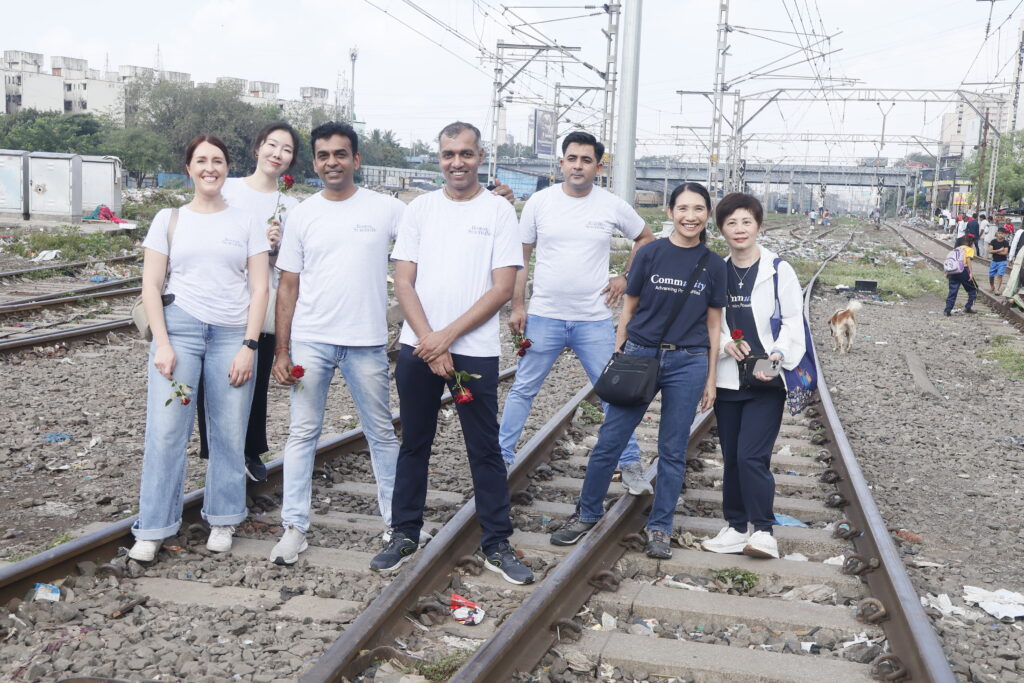
Nonprofits are a critical part of a country’s health system, especially for underserved populations. Working directly with organizations that can provide community members with quality care is critical and the Gunvati Jagan Nath Kapoor Foundation (GJK) does just that. In November 2025, Boston Scientific employees collaborated with GJK for an immersive, skills-based volunteering program in Mumbai, India.
GJK has strong program outcomes across cancer care, maternal health, and community health education, and its growth focused on helping the people they serve. That focus on impact left fundraising, brand awareness, and partnerships as areas of untapped potential. GJK sought support to design a business development strategy that builds on its 25-year legacy of delivering impactful health programs for underserved communities in Mumbai. The Boston Scientific team and GJK worked together to develop:
- Scalable tools for the maternal health program, including a way to sort and track participants and a scorecard to measure how well the program is working;
- Better fundraising tools and strategies, including a flexible pitch deck; and
- The groundwork for tech systems and online operations, including a clear process for building IT systems and deciding roles and responsibilities.
This work has the potential to support long-term organizational sustainability, scale flagship programs in cancer care and maternal health, and expand the reach and impact of GJK’s initiatives to additional underserved patients and communities.
“The program helped us sharpen our approach to outcome measurement, stakeholder engagement, and long-term sustainability,” shared the Gunvati Jagan Nath Kapoor Foundation Executive Director Nirjari Dalal. “We will now be able to alter our processes and create a more significant, robust system that will help increase beneficiary engagement and help us tackle high risk cases effectively.”
Edwards Lifesciences
Skills-based volunteering can also work directly within the health system. Edwards Lifesciences’ employees did just that to address Rheumatic Heart Disease (RHD) in Uttar Pradesh, India.
India represents 40% of the global burden of RHD, a communicable condition in adolescence (Strep Throat) that progresses into a non-communicable heart disease over time if untreated, resulting in more than 100,000 deaths annually.
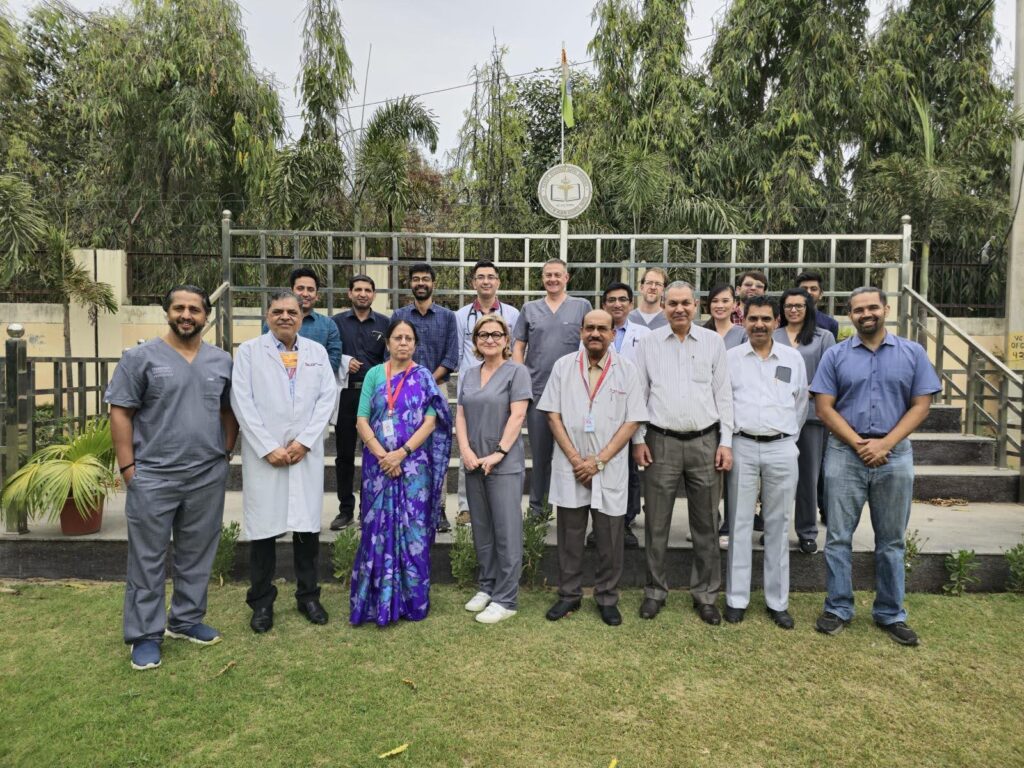
In 2024, through the Edwards Lifesciences Foundation Every Heartbeat Matters (EHM) Pro Bono Corps (PBC) program, a team of six global Edwards employees — with expertise in strategy, government affairs, IT, health affairs, technology and biostatistics—spent two weeks in Uttar Pradesh (population ~240 million) developing a 5-year strategy with Stanford Biodesign to eradicate RHD. This required embedding solutions within the broader healthcare system—district-level strategies, alignment with existing public health approaches, partnerships with hospitals, and a strong focus on patient journeys and awareness.
The team met with health-focused NGOs, hospital and clinic leaders, including Dr. Anita Saxena, a renowned cardiologist who heads Pandit Bhagwat Dayal Sharma University of Health Sciences in Rohtak, patients, and government health officials. This led to the development of a pilot proposal to implement the RHD elimination strategy, starting with one district in Uttar Pradesh.
The Edwards Lifesciences Foundation PBC program models how health technology organizations can bring their distinct expertise directly into a health system, not just around it. When corporate volunteers embed themselves in district-level planning, align with existing infrastructure, and center the patient journey, the work becomes part of the system rather than parallel to it. That kind of integration is what turns a single intervention into a durable approach others can follow.
Government Health Systems Strengthening
Pfizer
Companies are also working directly with governments. In support of the Accord for a Healthier World, which aims to close the health equity gap and enable greater access to healthcare innovation for 1.2 billion people living in 45 lower-income countries around the world, Pfizer’s Global Health Fellows program (GHF) leverages the expertise of their employees through skills‑based volunteering. Pfizer employees are using their skills in support of government‑led efforts to help remove barriers for patients to access quality healthcare. Examples include strengthening supply chain digitization of medicines and optimizing digital health tools. These engagements are designed to support national priorities and longer‑term health system resilience by focusing on knowledge‑sharing and operational capacity. By collaborating directly with government and trusted partners, the GHF program emphasizes health system strengthening to help close the health equity gap.
Looking Ahead
As health systems strengthening continues, skills-based volunteering can be a way for companies to provide capacity-focused resources. Boston Scientific and Edwards Lifesciences demonstrate how skilled volunteers can provide expertise to nonprofits and civil society working in healthcare. Pfizer’s example shows there is also value in partnering with governments as well. While providing financial resources may be limited, companies should consider how their employees can contribute their skills to strengthen healthcare systems.