
Five Years of Regenerative, Community-Led Change in Northern Nigeria
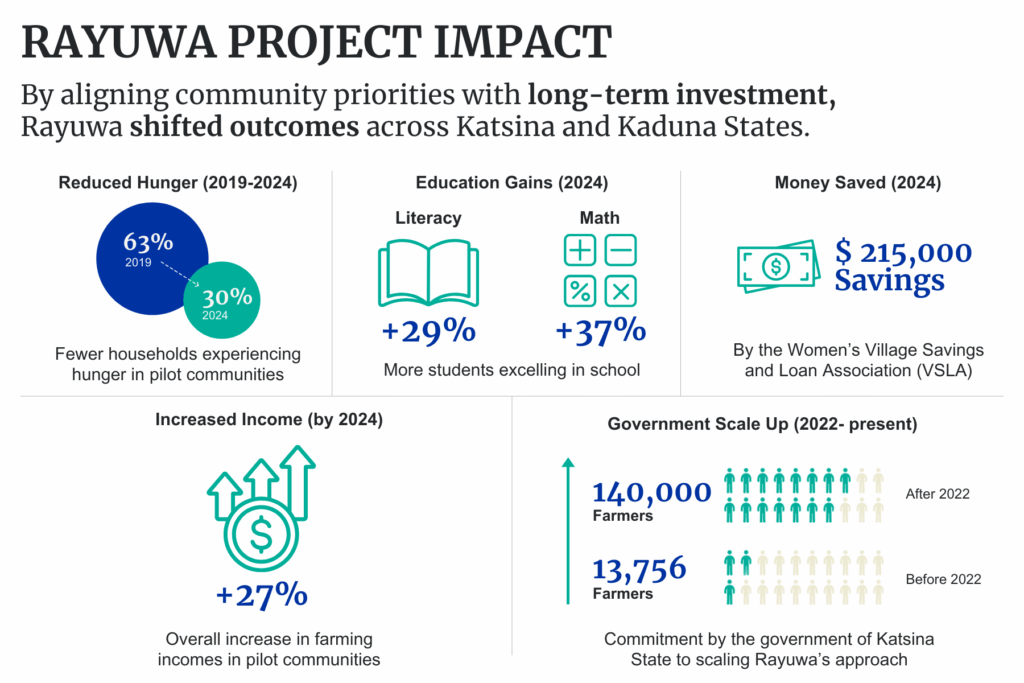
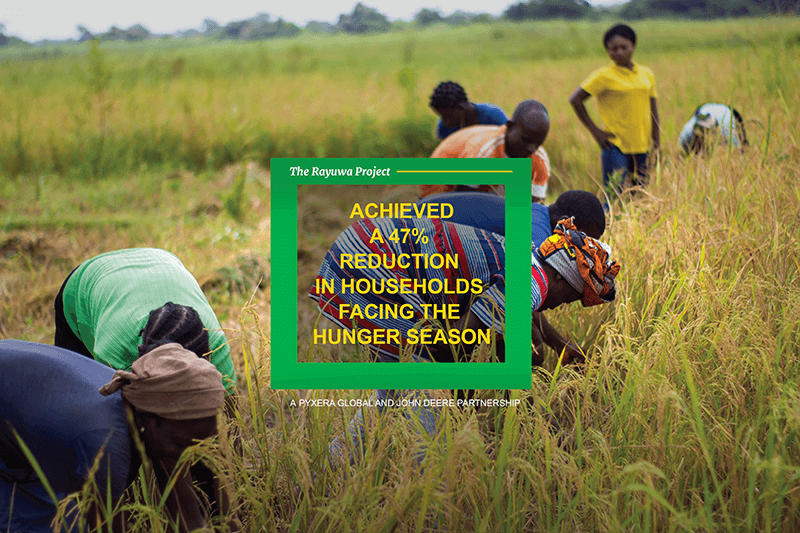
In Northern Nigeria’s farming communities, people faced a difficult reality: the annual “hunger season.” In 2019, 63% of households experienced periods when food ran out, forcing families to cut meals or go hungry.
This wasn’t just about a lack of food—it reflected deeper challenges where farmers didn’t have access to climate resilient agricultural practices, community networks, and quality education for their children. With climate change intensifying extreme weather and traditional farming methods producing fewer crops, communities needed more than short-term aid. They needed a pathway to lasting resilience. The Rayuwa Project helped provide that.
Rayuwa—meaning life in Hausa—began as a bold collaboration between Pyxera Global, the John Deere Foundation, the state government, and the local community in 2019.
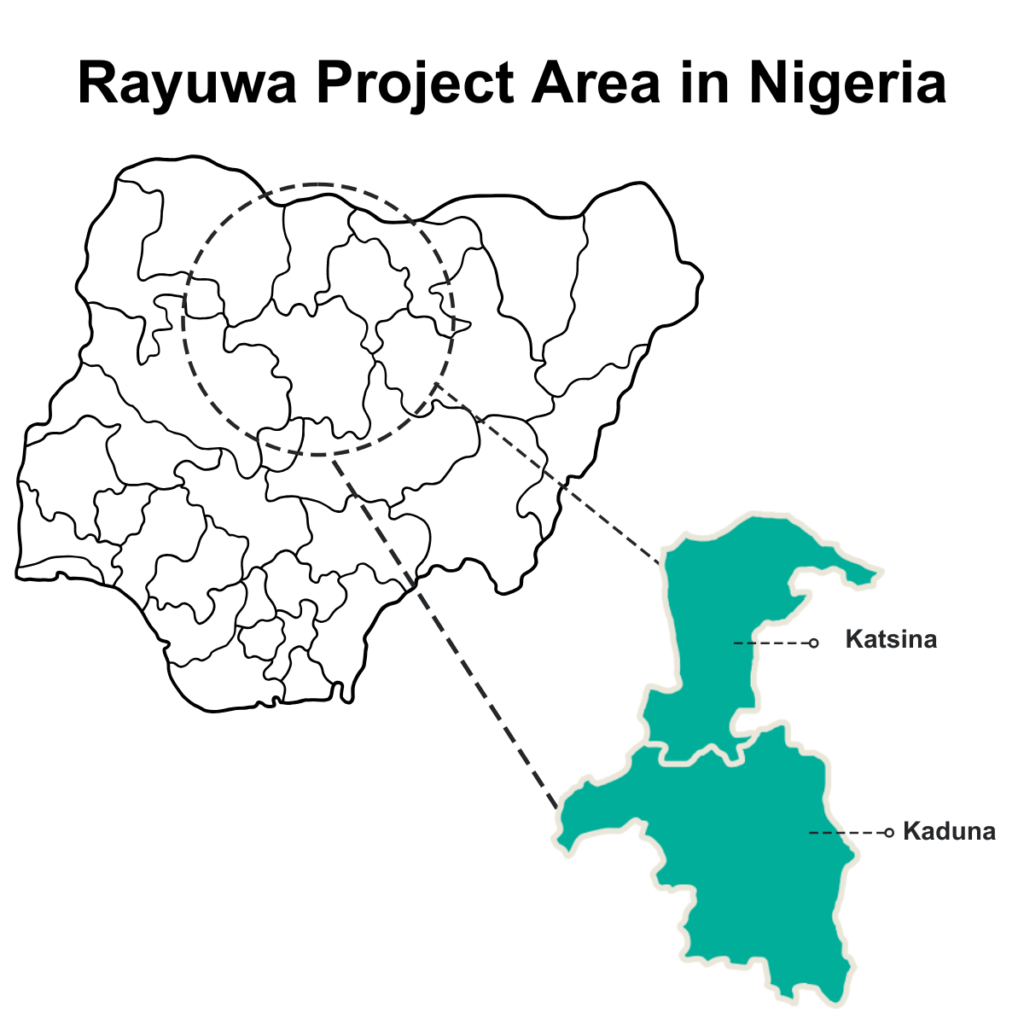
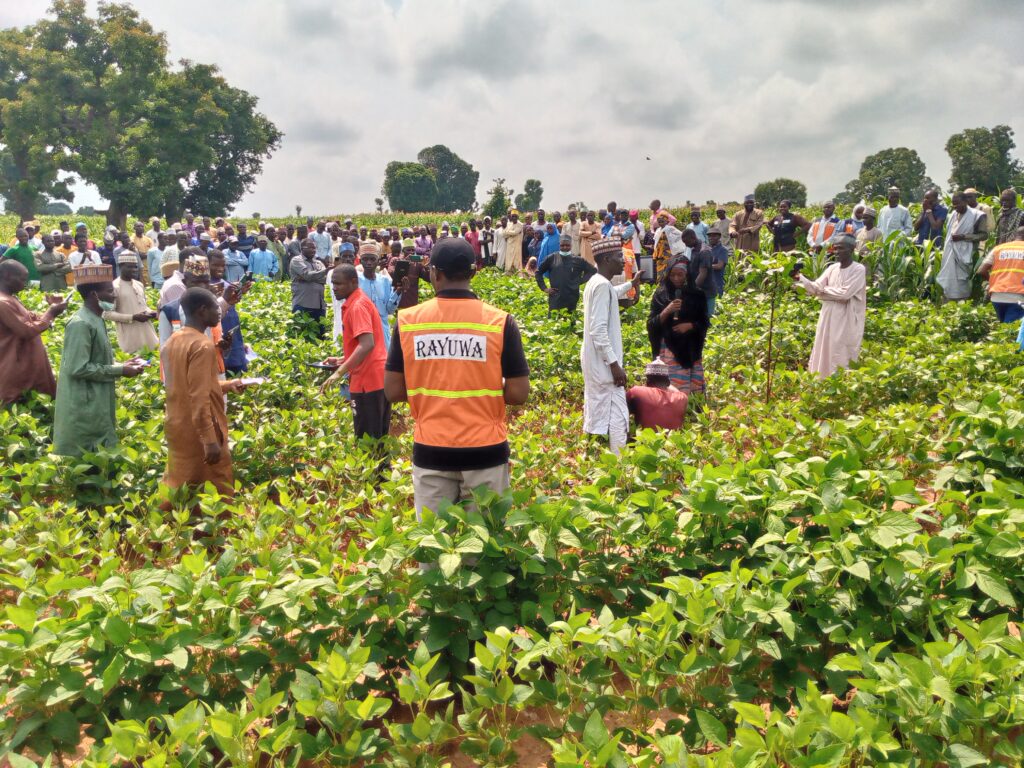
The Rayuwa Project was a multi-year program designed to improve the livelihoods and resilience of smallholder farming communities in Nigeria’s Katsina and Kaduna states.
Pyxera Global served as the systems navigator, translating John Deere Foundation’s commitment into a community-led initiative. Our role was to connect resources with local expertise, design structures that put farmers and families in the lead, and ensure agriculture, education, and financial tools worked together as a system. Rather than delivering aid, we created the conditions for long-term resilience that communities could sustain and scale on their own.
Rayuwa wasn’t built around charity – it was built around collaboration, long-term planning, and trust. It represented a new approach to rural development that puts local communities at the center as partners and looks at how everything (agriculture, education, and entrepreneurship) connects.
While the project has closed, its impact is lasting. Watch how the Rayuwa Project has impacted communities in Northern Nigeria:
Rayuwa focused on two interconnected areas: the business side of regenerative agriculture and how education supports improved success for the children in the community.
Regenerative Agriculture as a Business:
Accountable Education:
Bushrah Adamu, a 10-year-old from Kaduna State, dreams of becoming a nurse, but she and her peers faced significant challenges. Teachers were often absent, and many children stayed home to work on the farms.
The Rayuwa Project trained teachers and provided learners with essential learning materials. These resources improved learning conditions and motivated both students and teachers. Bushrah’s passion for education was ignited, boosting her confidence and strengthening her literacy, numeracy, and STEM skills.
“Before Rayuwa, becoming a nurse felt like an impossible dream. Now, with the support, learning materials, and STEM education I've received, I know I’m on the right path to achieving my goal.”
Bushrah Adamu
When communities lead their own change, the results endure.
The power of Rayuwa isn’t just in these numbers—it’s in how these changes have taken root.
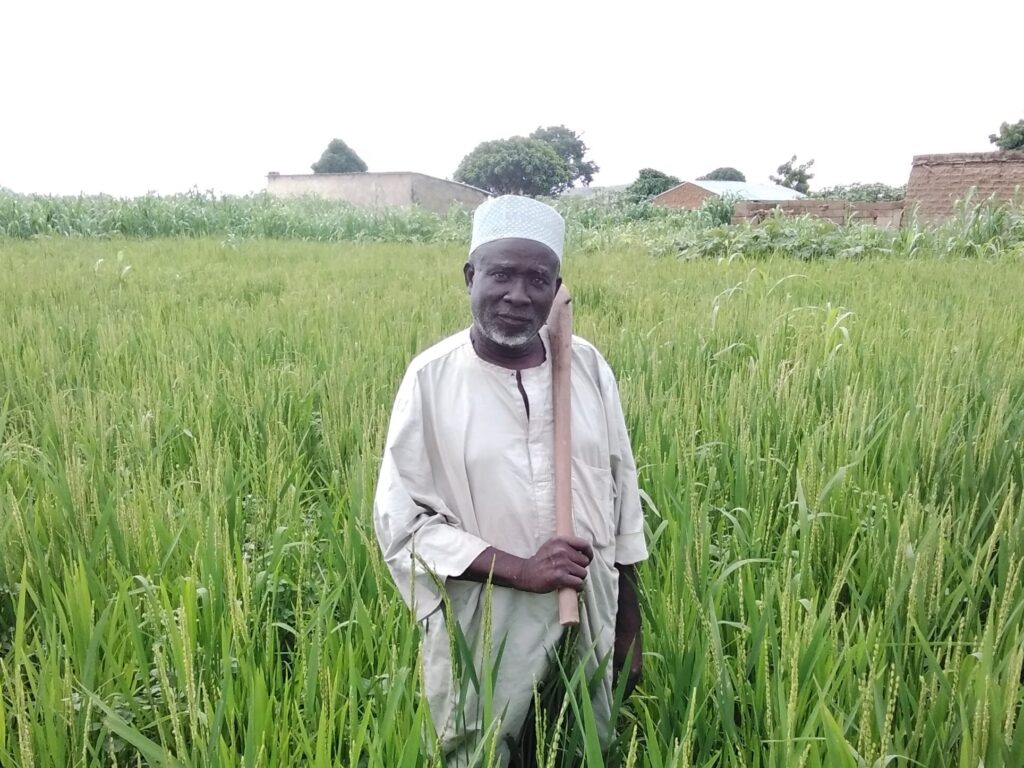
"I am grateful to the Rayuwa project for helping us realize that farming is a business enterprise."
Mallam Garba Surajo, Farmer
He increased his maize harvest six-fold and now leads his community’s first men’s savings group.
This is what happens when we challenge outdated systems and replace them with regenerative, equitable alternatives—communities don’t just survive; they thrive. The Katsina state government’s commitment to scale Rayuwa’s approach demonstrates how locally-led solutions can transform entire regions. They want to expand Rayuwa’s approach from 13,756 farmers to 140,000.
“The Government is committed to replicating the transformative success of the Rayuwa project throughout the state. By harnessing its proven strategies and working closely with the local communities, we pledge to empower farmers, enhance food security, and ensure sustainable agricultural development for a prosperous future."
Professor Ahmad Muhammad Bakori, Katsina State Commissioner of Agriculture
Rayuwa exemplifies that when systems are designed with and for communities, change scales. As we look ahead, the challenge isn’t whether regenerative models work; it’s how purposefully we can bring them to more places.
| Cookie | Duration | Description |
|---|---|---|
| cookielawinfo-checkbox-advertisement | 1 year | Set by the GDPR Cookie Consent plugin, this cookie is used to record the user consent for the cookies in the "Advertisement" category . |
| cookielawinfo-checkbox-analytics | 11 months | This cookie is set by GDPR Cookie Consent plugin. The cookie is used to store the user consent for the cookies in the category "Analytics". |
| cookielawinfo-checkbox-functional | 11 months | The cookie is set by GDPR cookie consent to record the user consent for the cookies in the category "Functional". |
| cookielawinfo-checkbox-necessary | 11 months | This cookie is set by GDPR Cookie Consent plugin. The cookies is used to store the user consent for the cookies in the category "Necessary". |
| cookielawinfo-checkbox-others | 11 months | This cookie is set by GDPR Cookie Consent plugin. The cookie is used to store the user consent for the cookies in the category "Other. |
| cookielawinfo-checkbox-performance | 11 months | This cookie is set by GDPR Cookie Consent plugin. The cookie is used to store the user consent for the cookies in the category "Performance". |
| CookieLawInfoConsent | 1 year | Records the default button state of the corresponding category & the status of CCPA. It works only in coordination with the primary cookie. |
| elementor | never | This cookie is used by the website's WordPress theme. It allows the website owner to implement or change the website's content in real-time. |
| viewed_cookie_policy | 11 months | The cookie is set by the GDPR Cookie Consent plugin and is used to store whether or not user has consented to the use of cookies. It does not store any personal data. |
| Cookie | Duration | Description |
|---|---|---|
| __cf_bm | 30 minutes | This cookie, set by Cloudflare, is used to support Cloudflare Bot Management. |
| Cookie | Duration | Description |
|---|---|---|
| _ga | 2 years | The _ga cookie, installed by Google Analytics, calculates visitor, session and campaign data and also keeps track of site usage for the site's analytics report. The cookie stores information anonymously and assigns a randomly generated number to recognize unique visitors. |
| _ga_PEZSF9ST5J | 2 years | This cookie is installed by Google Analytics. |
| CONSENT | 2 years | YouTube sets this cookie via embedded youtube-videos and registers anonymous statistical data. |
| Cookie | Duration | Description |
|---|---|---|
| VISITOR_INFO1_LIVE | 5 months 27 days | A cookie set by YouTube to measure bandwidth that determines whether the user gets the new or old player interface. |
| YSC | session | YSC cookie is set by Youtube and is used to track the views of embedded videos on Youtube pages. |
| yt-remote-connected-devices | never | YouTube sets this cookie to store the video preferences of the user using embedded YouTube video. |
| yt-remote-device-id | never | YouTube sets this cookie to store the video preferences of the user using embedded YouTube video. |