By Vanessa D’Souza, CEO, SNEHA (Society for Nutrition, Education and Health Action) & Shilpa Ahluwalia, Director – Program Delivery, Pyxera Global India
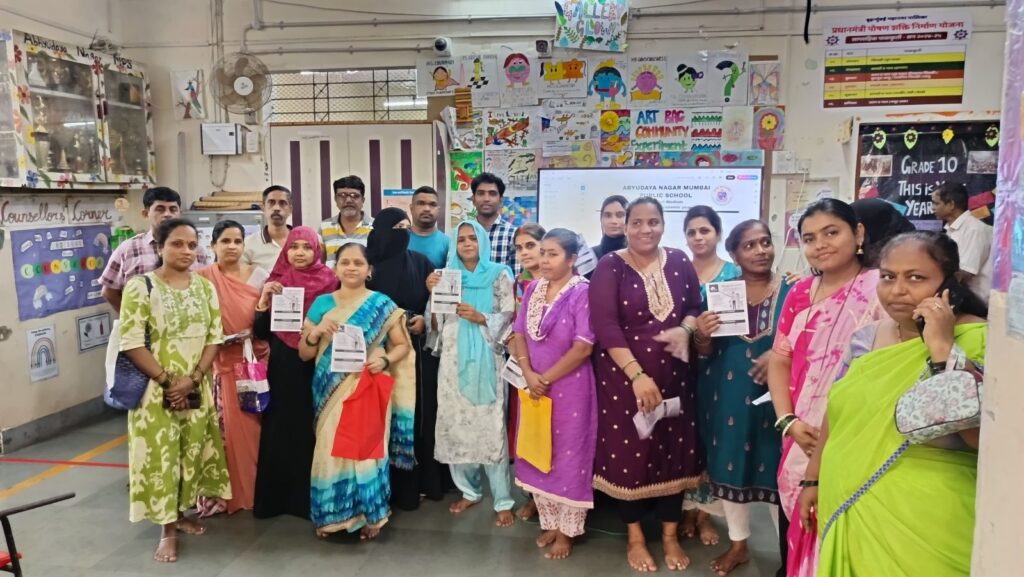
The Missing Infrastructure Behind Scalable Impact
“We realised that scaling responsibly meant first scaling our knowledge — not just our programs,” shared Vanessa D’Souza, CEO, SNEHA
India’s social sector is rich in talent, commitment, and innovation. It’s not lacking ideas or intent, but the infrastructure to systematically share what works.
Across India, non-governmental organizations (NGOs) create powerful, evidence-based solutions in health and social protection. Yet, much of this knowledge remains siloed within teams, embedded in individual experience, or buried in static documents — making it difficult to share, adapt, and scale. The result is duplication of effort, slow learning cycles, and limited replication, even when solutions are proven.
This points to a deeper truth the sector is only beginning to confront:
Lasting impact does not come from individual programs alone, but from systems that allow solutions to spread, adapt, and endure.
To scale meaningfully, NGOs must evolve from program implementers into knowledge institutions: organizations that codify learning, standardize models, train partners at scale, and support adaptation across contexts.
A well-designed knowledge centre is one way this institutional shift can take shape. More than a digital library, it builds a shared evidence base, translates practice into usable tools, and creates structured pathways for learning and replication. When supported by intentional, skills-based volunteering partnerships, such platforms can accelerate the transition from isolated excellence to ecosystem-level impact.
Why Scaling Programs Fails Without Scaling Knowledge
SNEHA (Society for Nutrition, Education and Health Action) is a Mumbai-based non-profit that has spent over 25 years building evidence-based models to improve the health, nutrition, and safety of women and children in urban, informal settlements. Its approach — intervening from pregnancy through adolescence and adulthood — reflects a core belief: health outcomes are cumulative, shaped by social norms, access to care, and systemic responses.
Between 2016 and 2025 alone, SNEHA directly reached over 620,000 women, children, and frontline health workers through community-based health programs, hospital partnerships, and capacity-building initiatives, and indirectly impacted more than 3.6 million people across Maharashtra by strengthening public health systems, service delivery quality, and prevention practices. As SNEHA expanded beyond Mumbai through technical partnerships with governments and NGOs, a consistent constraint surfaced. While its models were effective, replication depended heavily on in-person engagement and informal knowledge transfer. Years of research, manuals, training modules, and program learnings existed, but not within a structured, user-centered system designed for scale.
This challenge is not unique to SNEHA. Across India’s social sector:
- NGOs repeatedly reinvent tools that already exist elsewhere
- Government partners seek evidence-based models but struggle to access standardised resources
- Community-based organisations lack exposure to proven approaches adapted to Indian contexts
- Digital adoption has accelerated post-COVID, but knowledge systems have not kept pace
For Vanessa D’Souza, this moment marked a strategic inflection point. The organization could continue to grow its footprint, or it could invest in building the systems that would allow its knowledge to travel far beyond it.
From Institutional Memory to Shared Infrastructure
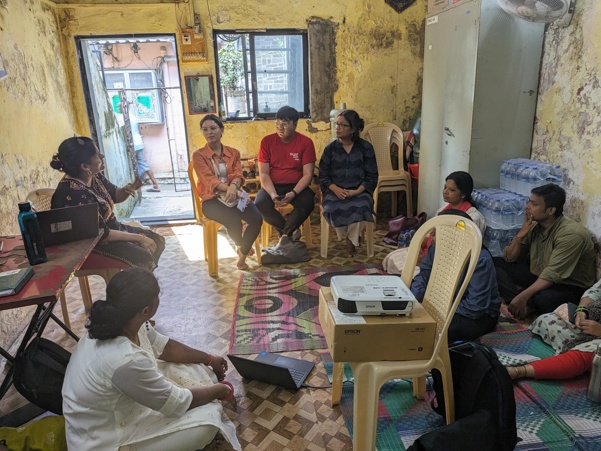
In 2023, SNEHA partnered with Johnson & Johnson (J&J) through their Global Pro Bono skills-based volunteering program, facilitated by Pyxera Global, to reimagine how its institutional knowledge could be organised, protected, and shared. Three J&J employees, selected for their relevant skills and experience, were matched to this project for a four-week, in-person assignment. The program was intentionally designed to create value for SNEHA. Pyxera Global and SNEHA worked closely to define what their core problem was and determine what J&J employees could feasibly collaborate with SNEHA in four weeks. The J&J professionals brought their deep expertise in digital platforms, user experience, and organizational design, capabilities that NGOs rarely have the time or resources to build internally. Through research on existing knowledge platforms, stakeholder interviews, content reviews, and design workshops, the teams co-created a blueprint for the SNEHA Knowledge Centre (SKC) — not as a repository, but as a but as a platform to strengthen capacity across the wider ecosystem,
The blueprint was later launched in August 2024 and today the Centre anchors SNEHA’s strategy around three integrated pillars:
- SNEHA Academy: A hybrid learning platform offering structured courses and applied learning. Early courses have already trained over 200 NGO professionals nationwide in areas such as gender-based violence prevention, maternal and child health, and mental health.
- Partnerships and Scaling: SNEHA now provides structured technical assistance to government systems and NGOs adapting its models across diverse contexts.
- Outreach and Collaboration: A national consultation with 30 NGOs resulted in a shared 12-indicator charter for violence prevention — a rare example of field-level alignment in India.
SNEHA’s Knowledge Centre is a much welcome resource in the space of public health capacity. One of the Centre’s partners, Nivedita Desai, Managing Trustee, ANIMEDH Charitable Trust, remarked on the value of the Centre explaining that “SNEHA’s mentorship and structured knowledge systems have strengthened our capacity — from community health delivery to monitoring, digital adoption, and working with government systems.”
A Call to Action: Invest in the Invisible Infrastructure that Enables Impact
If India is serious about improving maternal health, nutrition, and violence prevention at scale, it must invest in knowledge systems, learning platforms, and shared standards. The SNEHA Knowledge Centre illustrates how structured platforms can offer a systematic solution for capturing best practices, documenting, digitizing, and making them broadly accessible.
The SNEHA Knowledge Centre is one example of what becomes possible when NGOs, corporations, and intermediaries collaborate to build this infrastructure together.
- NGOs: engage with SKC courses and adapt evidence-based models
- CSR and corporate leaders: invest in skills-based capacity building, not just program delivery
- Government systems: partner to scale standardised, evidence-based training
- Foundations: fund the knowledge infrastructure that enables long-term impact
As Vanessa reflected, “When knowledge becomes accessible and adaptable, impact can finally travel.”